What to hand off, and what to keep out
Hand it off
- Document request templates
- Estimated tax and deadline reminders
- Plain-English explanations of a notice, from the facts
- Engagement and onboarding emails
Keep it out
- Client names and Social Security numbers
- Return details tied to a real person
- Bank and account numbers
If you prepare returns, Section 7216 requires a client's written consent before you disclose their return information, and the IRS hasn't said AI tools are exempt. Use templates and facts with the names stripped out. The consent rule.
Start with this one
Year-end is coming, and every new client needs the same email.
Swap each [bracket] for your own details.
I'm an accountant. Don't send anything. Write a short, friendly email template to new [kind of] clients listing the documents I need for [the work], grouped so it's easy to follow, with a due date of [date]. No client names. Signed [your name, your firm].
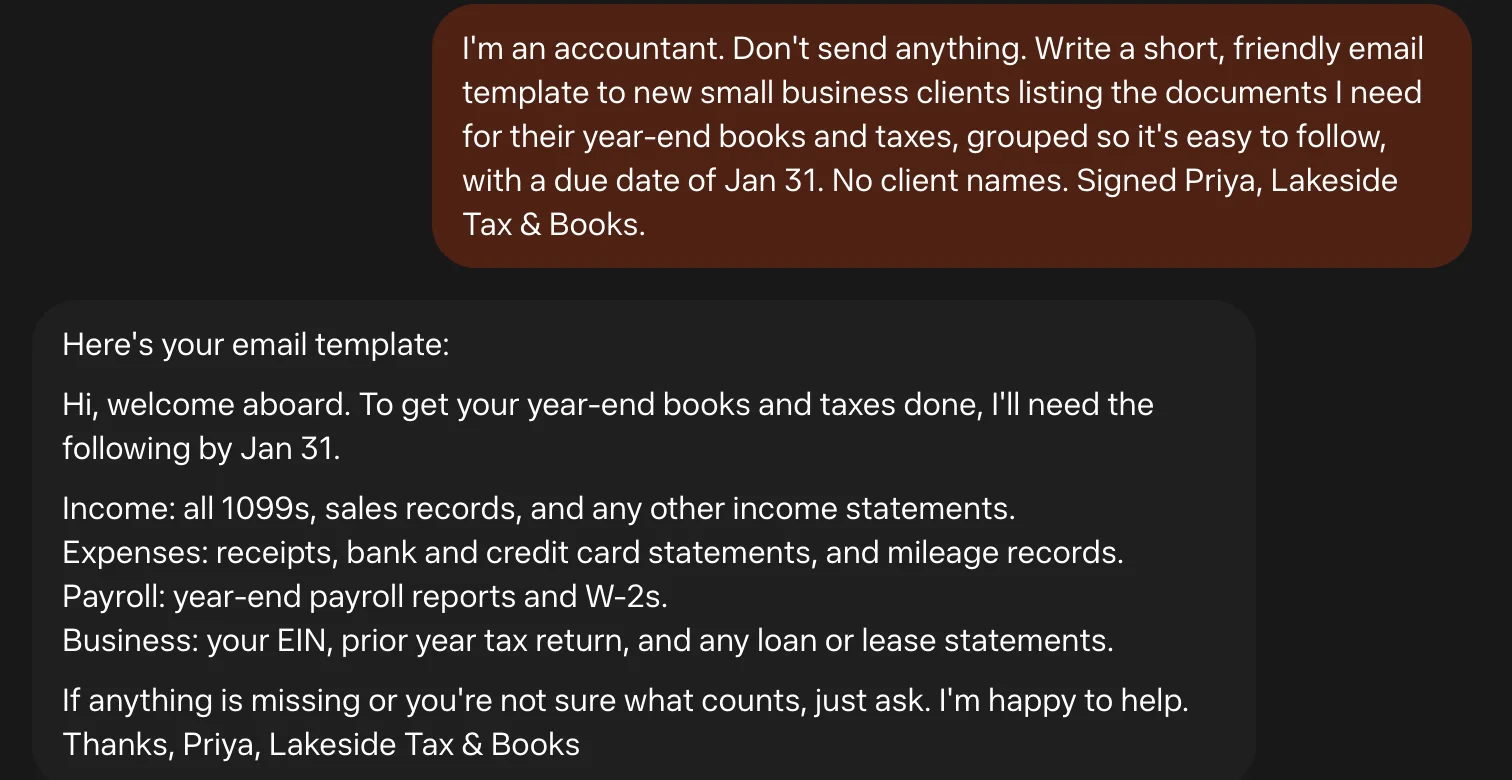
More jobs to give it
Each one has the exact words to send and the reply I got back.
- Remind clients about estimated taxesThe fourth-quarter payment is due in January, and someone always forgets.
- Explain an IRS notice to a clientA client forwarded an IRS letter in a panic, and you know it's fixable.
- Make a tax documents checklistTax season is coming, and the forms will arrive in five different places.
When you need more than Muse
When you're tracking a whole client list through busy season, Claude Duet holds more at once. And when document requests and reminders should run from your own practice software, without you, that's something I build.
New to Muse? It's Meta's free assistant. Here's how to set it up.
New jobs for your work, by email
One short email when I test another job for professionals.
You're on the list. New setups arrive by email.
 Bruno Amorim, founder