What to hand off, and what to keep out
Hand it off
- Deadline lists from public scheduling orders
- Plain-English client update templates
- New-client prep checklists
Keep it out
- Client names and facts about their matter
- Privileged communications and strategy
- Anything you'd need informed consent to share
ABA Formal Opinion 512 says to understand how an AI tool handles what you enter, and to get a client's informed consent before entering their information into a tool that may store or learn from it. Work from templates and public documents, and check your state's rules. The ABA on Opinion 512.
Start with this one
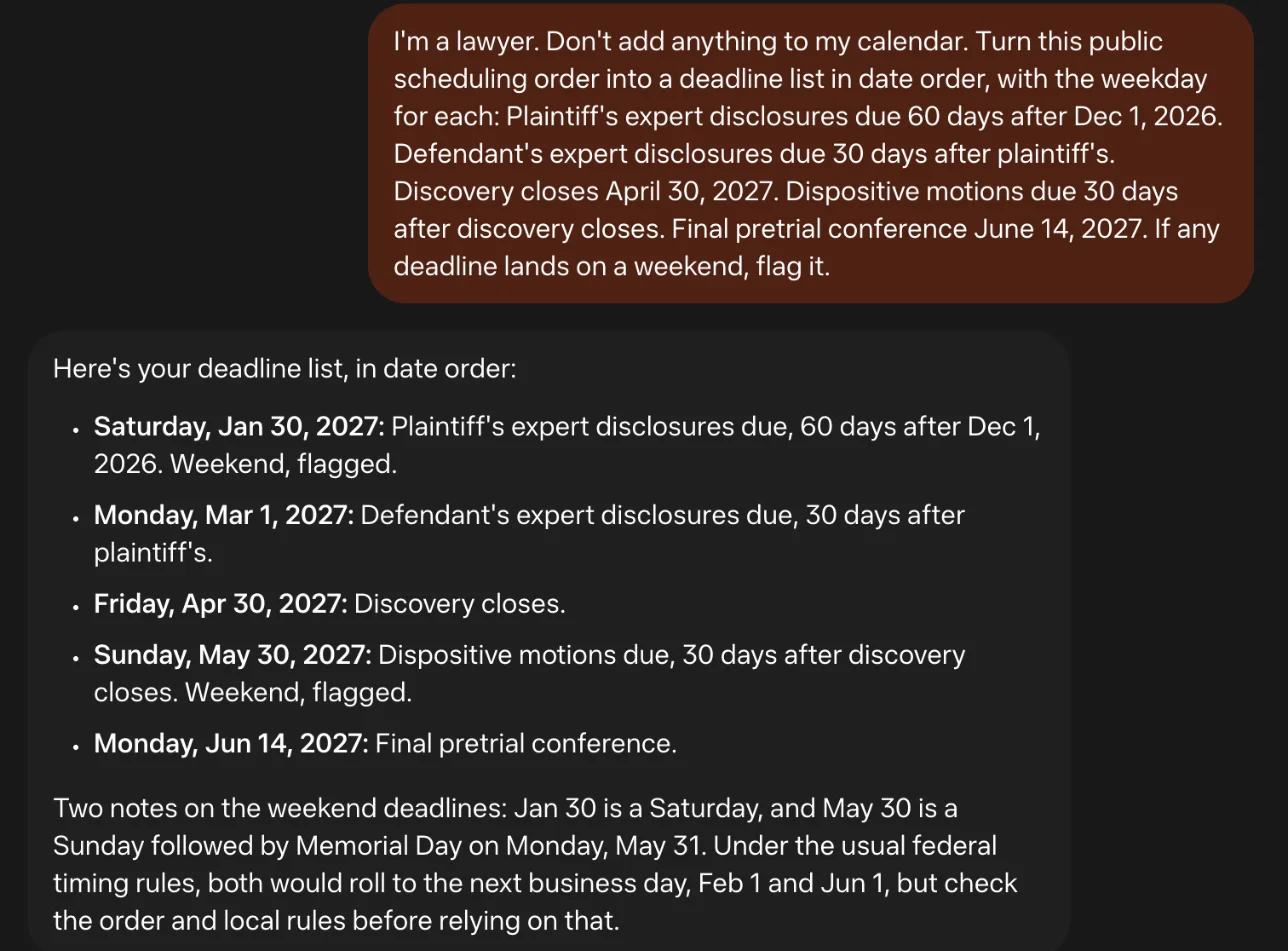
The scheduling order came in, and every deadline is "30 days after" something else.
Swap each [bracket] for your own details.
I'm a lawyer. Don't add anything to my calendar. Turn this public scheduling order into a deadline list in date order, with the weekday for each: [each deadline as the order states it]. If any deadline lands on a weekend, flag it.
More jobs to give it
Each one has the exact words to send and the reply I got back.
- Update a client after a hearingThe hearing went well, and your client is waiting to hear what it means.
- Send new clients a prep checklistFirst meetings run long when clients show up without their documents.
When you need more than Muse
For research and drafting on client matters, use a tool your firm has vetted for confidentiality. And when intake and scheduling should run inside your own practice software, that's something I build.
New to Muse? It's Meta's free assistant. Here's how to set it up.
New jobs for your work, by email
One short email when I test another job for professionals.
You're on the list. New setups arrive by email.
 Bruno Amorim, founder